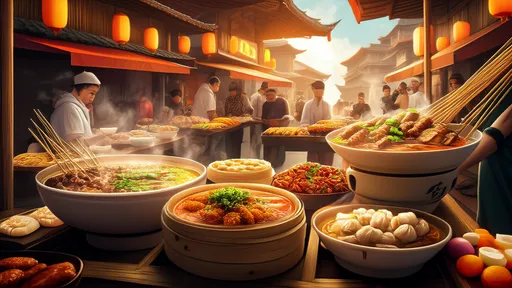
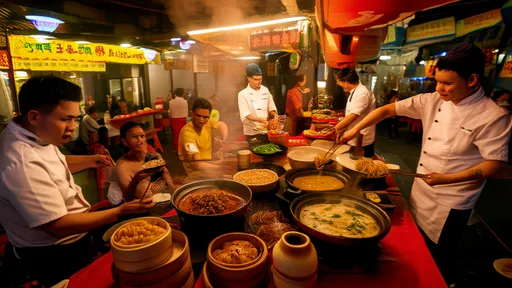
Stepping into the aromatic embrace of a traditional Khmer kitchen in Cambodia is to embark on a sensory journey that transcends mere eating. Here, amid the rhythmic chopping of lemongrass, the sizzle of pastes in hot pans, and the gentle rustle of fresh banana leaves being prepared, one finds the soul of Cambodian cuisine. It is a cuisine of balance, of history, and of profound connection to the land and its waterways. Two dishes, in particular, stand as pillars of this culinary tradition: the iconic Fish Amok and the humble yet complex Banana Leaf Wrapped Package. To understand them is to understand a story—a story told not in chapters, but through the fundamental flavors of sour, sweet, bitter, and spicy that dance upon the palate.
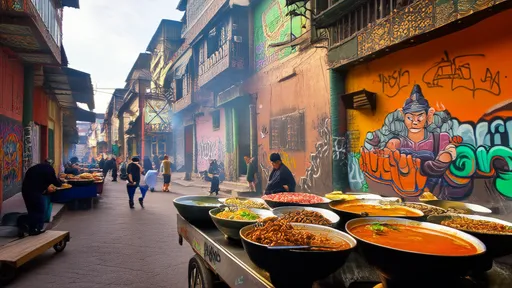
Nestled just across the causeway from Singapore, Johor Bahru often lives in the shadow of its glitzy neighbor. While Singapore draws crowds with its Michelin stars and polished hawker centers, JB—as locals affectionately call it—hides a treasure trove of culinary delights that won’t break the bank. For those willing to venture beyond the well-trodden path, this Malaysian city offers an authentic, vibrant, and deeply flavorful food scene that tells the story of its rich cultural tapestry.
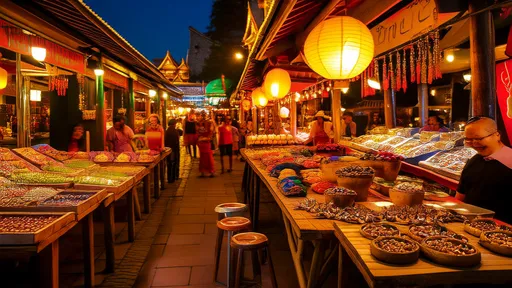
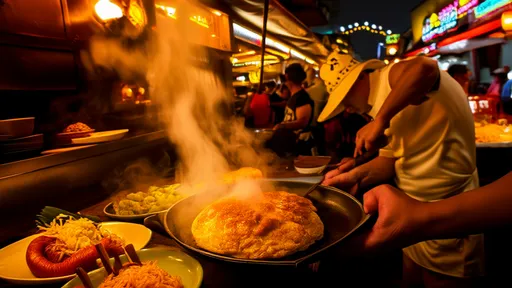
Singapore’s hawker centres are culinary institutions that offer a vibrant and affordable taste of the world. With just 50 Singapore dollars, one can embark on a global gastronomic journey, sampling dishes that reflect the rich cultural tapestry of the city-state. These bustling food havens are more than just places to eat—they are social hubs where diverse communities gather, and where tradition and innovation meet on a plate.
In the turquoise waters of Myanmar's Mergui Archipelago, a unique culture breathes its last. The Moken people, often called Asia's last sea nomads, have navigated these 800 islands for centuries without passports, maps or permanent addresses. Their entire existence has been woven into the tidal rhythms, monsoon winds and migratory patterns of marine life. Yet as the 21st century reaches even these remote corners of Southeast Asia, their ancient way of life stands at the brink of vanishing forever.
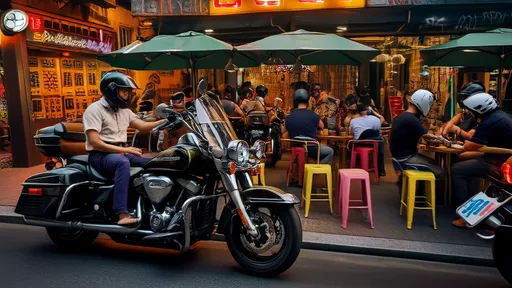
In the heart of Ho Chi Minh City, a unique urban symphony plays out daily, composed of two seemingly dissonant elements: the relentless roar of millions of motorcycles and the serene, slow-paced ritual of street-side coffee. This is not merely a coexistence; it is a profound, lived philosophy, a cultural dialectic that defines the soul of Vietnam's largest metropolis. The motorbike, a symbol of frantic motion, individual hustle, and relentless progress, engages in a constant, beautiful dance with the street coffee shop, an oasis of stillness, community, and contemplation. Together, they form a cohesive worldview, a guide to navigating modern life that is distinctly Saigonese.
Nestled within the azure embrace of the Andaman Sea, Langkawi stands as a jewel of Malaysia’s northwestern coast, a destination where nature’s ancient whispers meet modern indulgence. Among its many attractions, the Sky Bridge emerges as a breathtaking feat of engineering, suspended high above the verdant rainforest, offering not just panoramic views but a gateway to the island’s profound geological history. Below this architectural marvel lies a terrain sculpted over millennia, a silent narrator of Earth’s dynamic past. Simultaneously, Langkawi’s status as a duty-free haven adds a layer of contemporary allure, inviting visitors to explore not only its natural wonders but also its vibrant shopping scenes. This unique blend of primordial narrative and modern luxury defines the Langkawi experience, making it a compelling tale of time and treasure.
Nestled in the northernmost reaches of Palawan, El Nido remains one of the Philippines' most breathtaking archipelagos, often hailed as the last frontier of unspoiled natural beauty. Its name, which translates to "The Nest" in Spanish, evokes a sense of sheltered secrecy, a place where nature has carefully guarded its treasures against the rapid march of modernization. For travelers seeking an escape from the well-trodden tourist paths, El Nido offers a raw, exhilarating experience that feels both timeless and urgently present. This is not merely a destination; it is a call to adventure, an invitation to explore landscapes that seem pulled from the pages of a fantasy novel.
Nestled in the Andaman Sea, the Similan Islands of Thailand represent one of the planet's most extraordinary marine sanctuaries, a destination that seems plucked from a diver's most vivid dreams. What sets this archipelago apart, beyond its sheer underwater brilliance, is its unique conservation rhythm: the islands are open to visitors for only approximately 150 days each year. This enforced closure, typically from mid-May to mid-October, is a critical management strategy designed to allow the fragile ecosystems, both marine and terrestrial, to recover from the impacts of tourism and to weather the tumultuous monsoon season. This cyclical breathing space is what keeps the Similan Islands not just a destination, but a perpetually rejuvenating wonder.
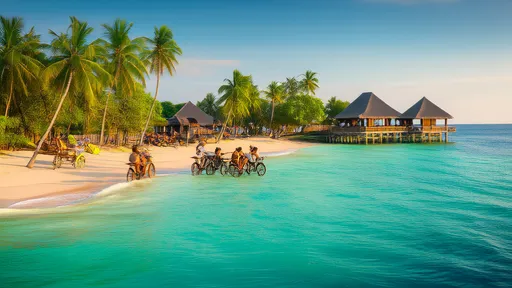
Nestled within the cerulean embrace of the Indian Ocean, the Gili Islands of Indonesia offer a sanctuary where time seems to slow to the gentle rhythm of horse hooves and bicycle wheels. Comprising three small islands—Gili Trawangan, Gili Meno, and Gili Air—this archipelago is a world apart, not just in geography but in philosophy. Here, the internal combustion engine is conspicuously absent, replaced by a transportation symphony of horse-drawn carriages, known as cidomos, and the simple, human-powered bicycle. This isn't merely a quaint tourist feature; it is the foundational principle of a lifestyle that prioritizes tranquility, sustainability, and a profound connection to the natural environment. The absence of roaring engines and honking horns is the first thing a visitor notices, an auditory void quickly filled by the sound of waves, wind, and the soft chatter of island life.
Nestled in the Gulf of Thailand, Phu Quoc Island emerges as Vietnam's best-kept secret, a sanctuary where time seems to stretch and soften, inviting travelers into its embrace of unhurried luxury. This pearl of an island, once a sleepy fishing community, has blossomed into a premier destination for those seeking refuge from the frenetic pace of modern life, offering a sophisticated blend of natural beauty, exquisite accommodations, and a profound sense of peace. It is not merely a place to visit; it is an experience to be absorbed slowly, a chapter of life to be savored.
Nestled on the northeastern coast of Borneo, the small fishing village of Semporna serves as the gateway to one of Malaysia’s most breathtaking marine wonderlands. While the town itself is modest, its surroundings are nothing short of spectacular—a scattering of islands embraced by turquoise waters teeming with vibrant coral reefs and exotic marine life. For travelers seeking both adventure and serenity, the experience of staying in a water villa and diving into the Coral Sea here is nothing less than transformative.
In the heart of the Indonesian archipelago lies a realm where myth and reality converge—Komodo Island. This untamed sanctuary, part of the Komodo National Park, offers an encounter with creatures that seem to have stepped straight out of a prehistoric epoch. The island is home to the Komodo dragon, the world’s largest lizard, a formidable predator that has roamed these lands for millions of years. But the island’s wonders don’t end there; it also boasts one of nature’s most whimsical creations: a beach with sand the color of cotton candy. A journey to Komodo is not merely a trip; it is an immersion into a landscape where the extraordinary becomes tangible.
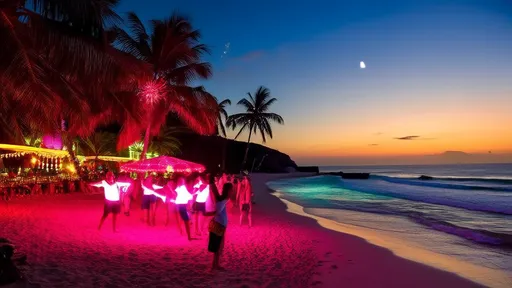
There is a rhythm to the island of Koh Pha Ngan, a heartbeat that pulses to two distinct and opposing tempos. By day, it is a lullaby of lapping waves and rustling palm fronds; by night, a thunderous, primal drumbeat that calls thousands to its famous shores. This is the island’s defining duality, a schizophrenic charm that allows a traveler to exist in two parallel realities within the span of a single sunrise and sunset. To know Koh Pha Ngan is to understand this oscillation, to willingly be swept up in its extreme currents of chaotic euphoria and profound peace.
Nestled in the heart of the Philippines, Boracay Island emerges as a paradise on earth, celebrated globally for its extraordinary natural beauty. The island’s most iconic feature is its breathtakingly fine white sand, often hailed as the finest in the world. This powdery sand, soft as flour underfoot, stretches along the famed White Beach, creating a pristine shoreline that captivates every visitor. Complementing this is the crystal-clear turquoise water, so transparent it has earned the poetic name "glass sea," reflecting the sky like a vast, serene mirror. Together, these elements form a landscape of surreal beauty, making Boracay a dream destination for travelers seeking both relaxation and adventure.
The intersection of athletic functionality and evening wear elegance has birthed one of fashion's most compelling contemporary hybrids: the performance evening gown. Where once these two worlds existed in separate sartorial universes, designers now weave technical fabrics into lavish silhouettes with the precision of couturiers and the ingenuity of engineers. This sartorial alchemy doesn't simply layer sportswear elements over formalwear - it reimagines the very architecture of glamour through the lens of movement.
The denim jacket stands as one of fashion’s most enduring silhouettes, a garment that has weathered shifting trends while maintaining its rebellious spirit. What began as utilitarian workwear in the late 19th century has evolved into a cultural touchstone, with each decade leaving its mark on the classic design. From its origins in the American West to its adoption by countercultural movements, the denim jacket’s journey reflects broader societal changes, making it far more than just a piece of clothing.
The fashion world is buzzing with the latest innovation in wardrobe staples: the redefined little black dress (LBD) featuring adjustable-length magnetic design. This groundbreaking approach to a timeless classic is set to revolutionize how women interact with their most trusted garment. Gone are the days of owning multiple LBDs for different occasions; this single, versatile piece adapts to your needs with effortless precision.
The fashion industry has long sought the perfect balance between aesthetics and functionality, particularly in outerwear. For decades, designers have wrestled with the challenge of creating lightweight, stylish coats that can withstand the elements without sacrificing form. Now, a groundbreaking innovation in textile technology promises to revolutionize the classic trench coat: paper-like waterproof coatings that defy conventional expectations of durability and performance.
The loafer has walked a curious path through fashion history – from Ivy League campuses to Silicon Valley offices, from preppy status symbol to countercultural staple, and now into the pixelated realms of digital avatars. This slip-on shoe with its mocassin construction and heel strap has become one of footwear's most enduring shape-shifters, adapting to each era while retaining its essential DNA.
The ancient Maya civilization left behind more than just towering pyramids and mysterious glyphs - they gifted humanity with an intricate cosmic clock that continues to inspire modern design. Fashion designers and textile artists are now rediscovering the profound beauty encoded within the Mayan solar calendar, transforming its sacred geometry into contemporary patterns that bridge millennia.
The fashion industry is witnessing a quiet revolution in menswear, where the humble white shirt is being reimagined through innovative detachable collar systems. This movement, often referred to as the "White Shirt Revolution," challenges traditional tailoring conventions by introducing unprecedented versatility to professional wardrobes. At its core lies a simple yet transformative idea: what if the most formal element of a dress shirt could be changed as easily as selecting a necktie?
The clinking of tiny silver hammers has echoed through Guizhou's misty mountains for centuries, where Miao artisans transform precious metal into wearable poetry. Today, this ancient craft faces a paradox - how to preserve its soul while shedding unnecessary weight for contemporary life. The answer may lie in subtraction.
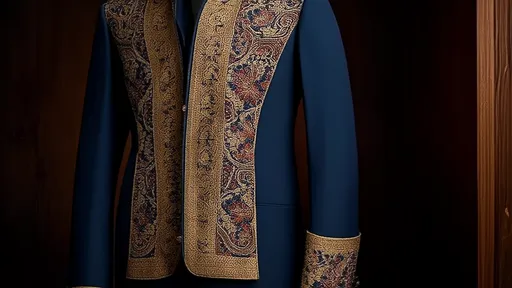
The world of fashion is no stranger to drawing inspiration from the rich tapestry of art history, but few collaborations are as visually striking as the recent trend of transplanting Persian miniature motifs onto modern suiting fabrics. This unexpected fusion of medieval Persian artistry with contemporary tailoring has created a sartorial revolution, blurring the lines between museum-quality craftsmanship and wearable art.
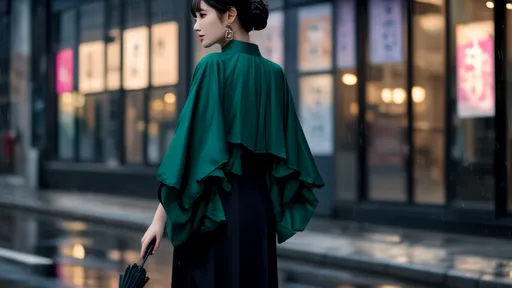
The traditional kimono, with its elegant lines and distinctive sleeve construction, has long been a source of inspiration for fashion innovators. Recently, a bold new styling technique has emerged from Tokyo's avant-garde fashion circles – transforming the kimono's signature wide sleeves into dramatic cape-like silhouettes. This sartorial alchemy breathes contemporary life into centuries-old garment architecture while preserving the garment's cultural DNA.
The rhythmic pulse of African geometry beats through generations, not in rigid Euclidean theorems but in the living language of tribal totems. Across the vast continent, from the scarified patterns of the Dinka to the fractal murals of the Bamileke, a profound visual mathematics emerges – one that distills cosmic order into minimalist forms while carrying the weight of ancestral memory.
The fashion world has long looked to Paris, Milan, and New York as its traditional powerhouses, but in recent years, a new contender has emerged from the East with undeniable force. Shenzhen Fashion Week, once a regional event, has rapidly evolved into a global phenomenon, showcasing the bold, innovative spirit of China’s new wave of designers. What sets this fashion week apart isn’t just its scale or glamour—it’s the raw, unfiltered creativity that challenges conventions and redefines what it means to be "Made in China."
The vast, sun-scorched expanse of the California desert became an unlikely cathedral of high fashion when Anthony Vaccarello presented Saint Laurent's latest collection. Against the stark beauty of this arid landscape, the creative director staged what can only be described as a masterclass in minimalist theater - one that left the fashion world reeling with its bold simplicity and raw emotional power.
The recent Gucci Twins campaign has reignited longstanding debates about cloning aesthetics in fashion advertising. When the luxury house released its eerie twin-themed visuals featuring models with identical features moving in perfect synchronization, audiences experienced equal parts fascination and discomfort. This uncanny valley effect lies at the heart of contemporary ethical discussions surrounding the artificial replication of human beauty.
The Chanel Terminal narrative has emerged as a fascinating cultural phenomenon, weaving together the worlds of luxury fashion and the universal language of travel. At its core, this concept represents more than just a seasonal collection or marketing campaign; it serves as a powerful contemporary metaphor for mobility, transition, and the fluidity of modern identity. The airport terminal, traditionally a transient non-place, becomes transformed through Chanel's lens into a stage for sartorial storytelling where luggage tags become jewelry and boarding passes transform into accessories.
The Prada concrete runway show has once again redefined the boundaries between architecture and fashion, transforming raw industrial aesthetics into a sophisticated language of contemporary style. Against the backdrop of an unfinished brutalist space, models strode through a landscape of exposed beams and rough-hewn surfaces, their garments serving as both contrast and complement to the environment. This deliberate collision of refinement and rawness speaks volumes about fashion's evolving relationship with urban materiality.
The bridal industry is undergoing a quiet revolution as sustainability becomes a priority for modern couples. Among the most significant shifts is the growing popularity of rented wedding dresses, a practice that challenges the tradition of single-use gowns. This movement isn't just about reducing textile waste—it's sparking crucial conversations about hygiene standards in garment circulation. As more brides opt for rented dresses, the need for standardized cleaning protocols has become impossible to ignore.
The luxury resale market has long grappled with the challenge of authenticity. As counterfeit goods become increasingly sophisticated, traditional verification methods often fall short, leaving buyers and sellers vulnerable to fraud. Now, a groundbreaking solution is emerging: blockchain-based authentication systems designed specifically for pre-owned luxury items. This technological advancement promises to revolutionize how we verify high-end secondhand goods while bringing much-needed transparency to the $50 billion global luxury resale industry.
The fashion industry is witnessing a significant shift as accessible luxury brands recalibrate their pricing strategies to adapt to changing consumer behaviors. Among these brands, Michael Kors has emerged as a key player in this strategic pivot, adjusting its price points to maintain relevance in an increasingly competitive market. The move reflects broader trends in the industry, where consumers are becoming more price-sensitive without sacrificing their desire for quality and brand prestige.
The Alpha generation, born between 2010 and 2024, is coming of age in a world vastly different from that of their Millennial or even Gen Z predecessors. As the first truly digital-native cohort, their relationship with fashion and consumption is being shaped by unprecedented technological, environmental, and social forces. Their future wardrobes won’t just reflect personal style but will serve as a canvas for broader cultural shifts.