Nestled in the northernmost reaches of Palawan, El Nido remains one of the Philippines' most breathtaking archipelagos, often hailed as the last frontier of unspoiled natural beauty. Its name, which translates to "The Nest" in Spanish, evokes a sense of sheltered secrecy, a place where nature has carefully guarded its treasures against the rapid march of modernization. For travelers seeking an escape from the well-trodden tourist paths, El Nido offers a raw, exhilarating experience that feels both timeless and urgently present. This is not merely a destination; it is a call to adventure, an invitation to explore landscapes that seem pulled from the pages of a fantasy novel.
The concept of island hopping here transcends the typical tourist excursion—it becomes a mode of discovery, a way to engage with the environment on its own terms. Each day brings a new itinerary of crystalline lagoons, hidden beaches, and majestic limestone cliffs that rise from the sea like ancient guardians. The waters shift in hue from deep sapphire to luminous turquoise, revealing vibrant coral gardens and diverse marine life with every glance below the surface. To journey through El Nido is to witness the earth in its most primal state, a reminder of the wildness that still exists in our world.
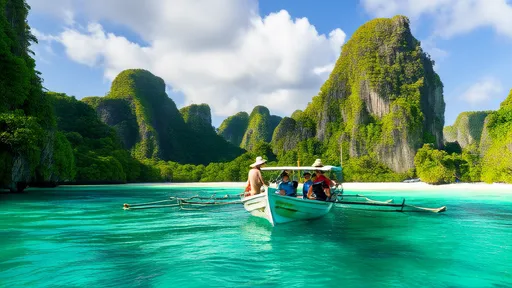
Setting sail from the main town, the rhythm of the ocean immediately takes hold. Traditional outrigger boats, known locally as bancas, cut gracefully through the waves, their sails billowing against the backdrop of karst formations. These vessels are more than just transportation; they are a symbol of a way of life that has endured for generations, connecting the modern traveler to the timeless traditions of the sea. As you leave the harbor behind, the sense of anticipation is palpable—each cove and island promises its own unique story, its own moment of wonder.
One of the most iconic stops on any El Nido expedition is the Big Lagoon. Accessible only by kayak or by swimming through a narrow opening in the limestone rock, the lagoon unfolds like a hidden chamber, its waters so clear and still that they act as a mirror to the towering cliffs above. The silence here is profound, broken only by the dip of a paddle or the call of a distant bird. It is a place that demands reverence, a natural cathedral where light and water perform a silent, daily dance.
Equally mesmerizing is the Small Lagoon, a more intimate space where swimmers can navigate through a tiny crevice to discover an enclosed pool of emerald water. Here, the outside world falls away, replaced by the gentle lap of waves against rock and the feeling of having stumbled upon a secret that few are privileged to share. Snorkelers will find themselves surrounded by schools of tropical fish, their colors flashing like jewels in the dappled sunlight that filters through the water.
No journey through El Nido would be complete without a visit to Secret Beach, a location made famous by Alex Garland's novel The Beach, though it predates the fame of Thailand's Maya Bay. Reached by swimming through a narrow fissure in the rock wall, this secluded stretch of sand is hemmed in on all sides by cliffs, with only the sky above. It is a place of stunning isolation, where the only footprints in the sand may well be your own. The sense of discovery here is visceral, a thrill that harks back to the explorers of old who charted unknown lands.
For those drawn to heights and panoramic views, Taraw Cliff presents a challenging but rewarding climb. The sharp, jagged limestone requires careful navigation, but those who reach the top are rewarded with a vista that stretches across the entire bay—a mosaic of islands, water, and sky that seems to stretch into infinity. At sunrise or sunset, the scene transforms into a painting of fiery hues, a moment of pure magic that encapsulates the raw beauty of El Nido.
Beyond the well-known spots, the true spirit of El Nido reveals itself in the spontaneous moments—a chance encounter with a pod of dolphins riding the bow wave of the boat, the discovery of a deserted cove where you can swim in utter solitude, or the taste of freshly grilled fish on a beach as the sun sets. The local guides, with their deep knowledge of the tides and terrain, often share stories of the islands' history and ecology, adding layers of meaning to the stunning visuals.
Preservation and responsibility are critical themes in El Nido. The region's popularity has brought economic benefits to the local community, but it has also introduced challenges related to sustainability and environmental protection. Visitors are encouraged to tread lightly, to respect the delicate ecosystems, and to support practices that minimize impact. The use of reef-safe sunscreen, the avoidance of single-use plastics, and adherence to designated pathways are small but significant acts that help ensure El Nido remains a virgin paradise for generations to come.
As the day ends and the bancas return to shore, the sky erupts in shades of orange and purple, reflecting off the calm waters of Bacuit Bay. The air fills with the sounds of laughter and shared stories, the camaraderie of those who have experienced something extraordinary together. El Nido does not simply offer a vacation; it provides a transformation—a reconnection with the natural world and a reminder of the adventures that lie waiting at the edges of the map.
In a world where true wilderness is increasingly rare, El Nido stands as a testament to the power of place, a sanctuary where the human spirit can still find wonder and humility. It is more than a destination; it is a journey into the heart of what it means to explore, to discover, and to protect the last untouched corners of our planet. For those who answer its call, the rewards are immeasurable, and the memories indelible.
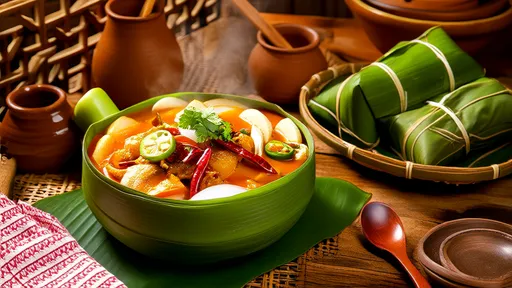
Stepping into the aromatic embrace of a traditional Khmer kitchen in Cambodia is to embark on a sensory journey that transcends mere eating. Here, amid the rhythmic chopping of lemongrass, the sizzle of pastes in hot pans, and the gentle rustle of fresh banana leaves being prepared, one finds the soul of Cambodian cuisine. It is a cuisine of balance, of history, and of profound connection to the land and its waterways. Two dishes, in particular, stand as pillars of this culinary tradition: the iconic Fish Amok and the humble yet complex Banana Leaf Wrapped Package. To understand them is to understand a story—a story told not in chapters, but through the fundamental flavors of sour, sweet, bitter, and spicy that dance upon the palate.
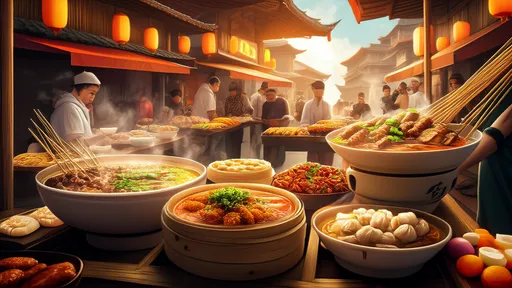
Nestled just across the causeway from Singapore, Johor Bahru often lives in the shadow of its glitzy neighbor. While Singapore draws crowds with its Michelin stars and polished hawker centers, JB—as locals affectionately call it—hides a treasure trove of culinary delights that won’t break the bank. For those willing to venture beyond the well-trodden path, this Malaysian city offers an authentic, vibrant, and deeply flavorful food scene that tells the story of its rich cultural tapestry.
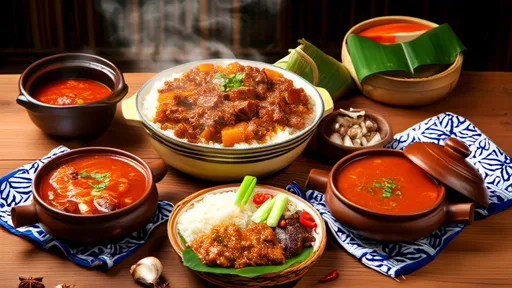
Stepping into a Padang restaurant is like entering a culinary theater where the performance is as intense as the flavors. Before you even have a chance to glance at a menu—if one exists at all—a waiter approaches your table with a tower of small plates, each holding a different dish. This is the legendary hidang style of serving, a tradition as bold and uncompromising as the Minangkabau culture from which it springs. You don’t order; you are presented with possibility. The rule is simple yet startling to the uninitiated: you pay only for what you touch.
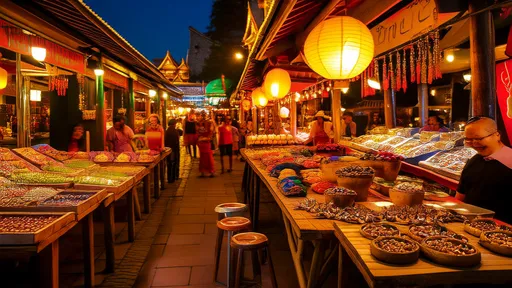
As dusk descends upon the ancient city of Chiang Mai, a vibrant transformation takes place along Ratchadamnoen Road and its surrounding lanes. The Sunday Night Market, a weekly spectacle that draws both locals and travelers into its bustling embrace, awakens with a symphony of sights, sounds, and aromas. From the intricate handcrafted treasures that tell stories of Lanna heritage to the irresistible allure of mango sticky rice that sweetens the tropical evening air, this market is not merely a place to shop or eat—it is an immersive cultural carnival, a living tapestry of Northern Thai life.
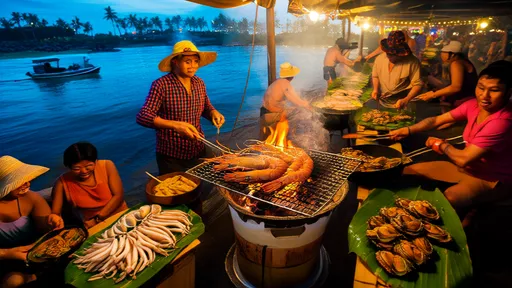
In the heart of the Philippines, where the sun kisses the sea and the air hums with life, lies Cebu—a haven for those seeking not just a meal, but an experience. Here, the tradition of eating with one’s hands isn’t just a method; it’s a celebration of flavor, community, and authenticity. And when it comes to seafood, Cebu offers a feast so bold, so unapologetically rich, that it leaves an indelible mark on every traveler’s soul.
In the labyrinthine heart of Hanoi, where the ancient rhythms of Vietnam pulse strongest, lies the legendary Old Quarter—a place locals call 36 Pho Phuong, the 36 Streets. Each street, historically dedicated to a specific craft or guild, forms a mosaic of Vietnam’s soul. And weaving through the smoky, fragrant air of this district is the story of a humble bowl of soup that is anything but simple: Pho. This is not just a dish; it is a narrative steeped in history, a daily ritual, and a fierce culinary battleground where tradition and innovation quietly clash.
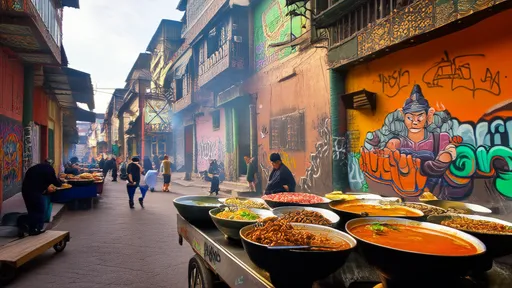
George Town, the vibrant capital of Penang, is a city where history, culture, and cuisine converge in the most delightful ways. Among its labyrinth of narrow streets and colorful shophouses, two distinct yet intertwined treasures await discovery: the iconic murals that adorn its walls and the soul-satisfying street food that defines its culinary landscape. For travelers and food enthusiasts, there is no greater adventure than tracing the vibrant street art through the city’s heart while hunting down the most authentic bowls of laksa and plates of char kway teow—a journey that engages all the senses.
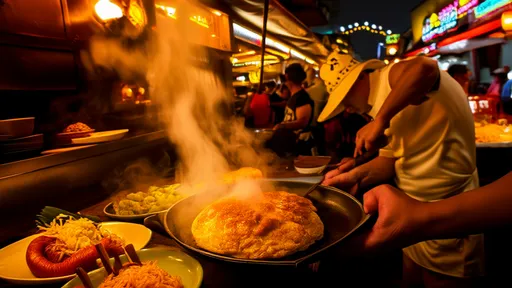
In the vibrant, chaotic heart of Bangkok, a unique culinary revolution has been quietly simmering for decades, one that challenges the very foundations of fine dining. The inclusion of street food in the prestigious Michelin Guide was not merely an addition; it was a seismic acknowledgment of an entire culture of cooking that thrives on pavements, under makeshift awnings, and over roaring woks. This guide, particularly spotlighting legends like Jay Fai, has done more than just recommend dishes; it has validated a way of life, immortalizing the skill, dedication, and artistry found at the humble stalls that line the city's bustling soi (streets). It tells a story where a coveted star is not born in a sterile, temperature-controlled kitchen but amidst the heat, smoke, and rhythmic clang of a street chef's domain.
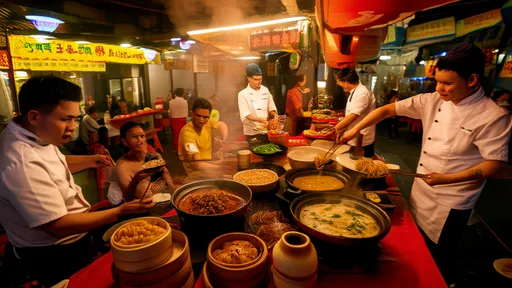
Singapore’s hawker centres are culinary institutions that offer a vibrant and affordable taste of the world. With just 50 Singapore dollars, one can embark on a global gastronomic journey, sampling dishes that reflect the rich cultural tapestry of the city-state. These bustling food havens are more than just places to eat—they are social hubs where diverse communities gather, and where tradition and innovation meet on a plate.
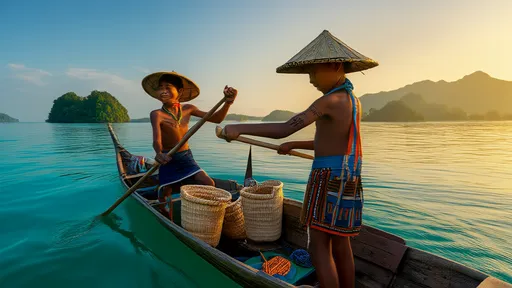
In the turquoise waters of Myanmar's Mergui Archipelago, a unique culture breathes its last. The Moken people, often called Asia's last sea nomads, have navigated these 800 islands for centuries without passports, maps or permanent addresses. Their entire existence has been woven into the tidal rhythms, monsoon winds and migratory patterns of marine life. Yet as the 21st century reaches even these remote corners of Southeast Asia, their ancient way of life stands at the brink of vanishing forever.
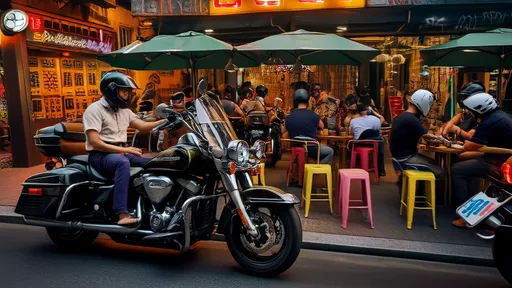
In the heart of Ho Chi Minh City, a unique urban symphony plays out daily, composed of two seemingly dissonant elements: the relentless roar of millions of motorcycles and the serene, slow-paced ritual of street-side coffee. This is not merely a coexistence; it is a profound, lived philosophy, a cultural dialectic that defines the soul of Vietnam's largest metropolis. The motorbike, a symbol of frantic motion, individual hustle, and relentless progress, engages in a constant, beautiful dance with the street coffee shop, an oasis of stillness, community, and contemplation. Together, they form a cohesive worldview, a guide to navigating modern life that is distinctly Saigonese.
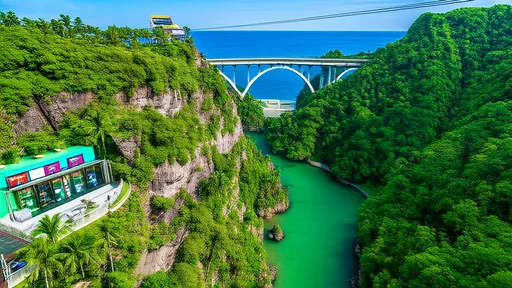
Nestled within the azure embrace of the Andaman Sea, Langkawi stands as a jewel of Malaysia’s northwestern coast, a destination where nature’s ancient whispers meet modern indulgence. Among its many attractions, the Sky Bridge emerges as a breathtaking feat of engineering, suspended high above the verdant rainforest, offering not just panoramic views but a gateway to the island’s profound geological history. Below this architectural marvel lies a terrain sculpted over millennia, a silent narrator of Earth’s dynamic past. Simultaneously, Langkawi’s status as a duty-free haven adds a layer of contemporary allure, inviting visitors to explore not only its natural wonders but also its vibrant shopping scenes. This unique blend of primordial narrative and modern luxury defines the Langkawi experience, making it a compelling tale of time and treasure.
Nestled in the northernmost reaches of Palawan, El Nido remains one of the Philippines' most breathtaking archipelagos, often hailed as the last frontier of unspoiled natural beauty. Its name, which translates to "The Nest" in Spanish, evokes a sense of sheltered secrecy, a place where nature has carefully guarded its treasures against the rapid march of modernization. For travelers seeking an escape from the well-trodden tourist paths, El Nido offers a raw, exhilarating experience that feels both timeless and urgently present. This is not merely a destination; it is a call to adventure, an invitation to explore landscapes that seem pulled from the pages of a fantasy novel.
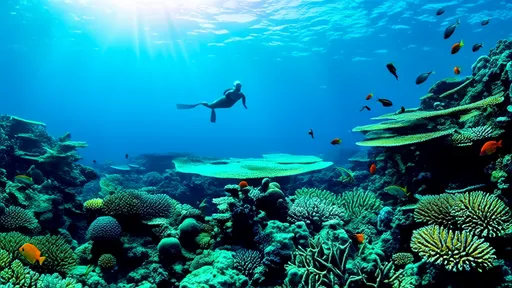
Nestled in the Andaman Sea, the Similan Islands of Thailand represent one of the planet's most extraordinary marine sanctuaries, a destination that seems plucked from a diver's most vivid dreams. What sets this archipelago apart, beyond its sheer underwater brilliance, is its unique conservation rhythm: the islands are open to visitors for only approximately 150 days each year. This enforced closure, typically from mid-May to mid-October, is a critical management strategy designed to allow the fragile ecosystems, both marine and terrestrial, to recover from the impacts of tourism and to weather the tumultuous monsoon season. This cyclical breathing space is what keeps the Similan Islands not just a destination, but a perpetually rejuvenating wonder.
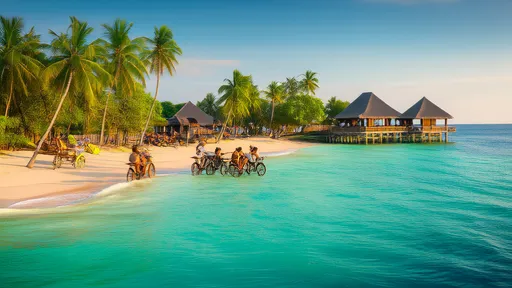
Nestled within the cerulean embrace of the Indian Ocean, the Gili Islands of Indonesia offer a sanctuary where time seems to slow to the gentle rhythm of horse hooves and bicycle wheels. Comprising three small islands—Gili Trawangan, Gili Meno, and Gili Air—this archipelago is a world apart, not just in geography but in philosophy. Here, the internal combustion engine is conspicuously absent, replaced by a transportation symphony of horse-drawn carriages, known as cidomos, and the simple, human-powered bicycle. This isn't merely a quaint tourist feature; it is the foundational principle of a lifestyle that prioritizes tranquility, sustainability, and a profound connection to the natural environment. The absence of roaring engines and honking horns is the first thing a visitor notices, an auditory void quickly filled by the sound of waves, wind, and the soft chatter of island life.
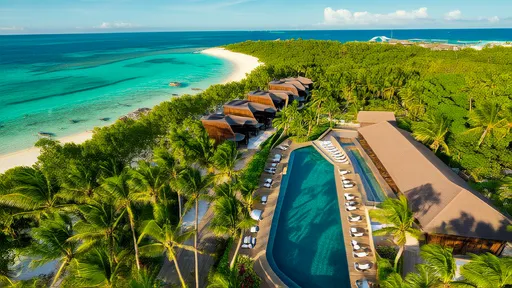
Nestled in the Gulf of Thailand, Phu Quoc Island emerges as Vietnam's best-kept secret, a sanctuary where time seems to stretch and soften, inviting travelers into its embrace of unhurried luxury. This pearl of an island, once a sleepy fishing community, has blossomed into a premier destination for those seeking refuge from the frenetic pace of modern life, offering a sophisticated blend of natural beauty, exquisite accommodations, and a profound sense of peace. It is not merely a place to visit; it is an experience to be absorbed slowly, a chapter of life to be savored.
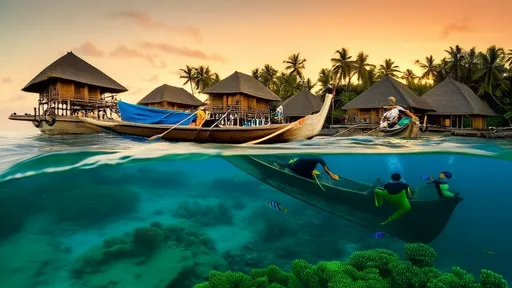
Nestled on the northeastern coast of Borneo, the small fishing village of Semporna serves as the gateway to one of Malaysia’s most breathtaking marine wonderlands. While the town itself is modest, its surroundings are nothing short of spectacular—a scattering of islands embraced by turquoise waters teeming with vibrant coral reefs and exotic marine life. For travelers seeking both adventure and serenity, the experience of staying in a water villa and diving into the Coral Sea here is nothing less than transformative.
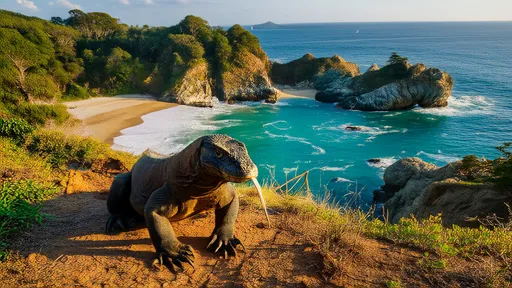
In the heart of the Indonesian archipelago lies a realm where myth and reality converge—Komodo Island. This untamed sanctuary, part of the Komodo National Park, offers an encounter with creatures that seem to have stepped straight out of a prehistoric epoch. The island is home to the Komodo dragon, the world’s largest lizard, a formidable predator that has roamed these lands for millions of years. But the island’s wonders don’t end there; it also boasts one of nature’s most whimsical creations: a beach with sand the color of cotton candy. A journey to Komodo is not merely a trip; it is an immersion into a landscape where the extraordinary becomes tangible.
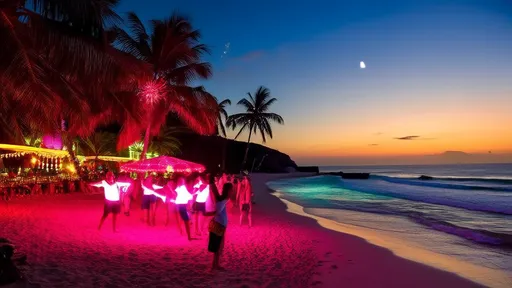
There is a rhythm to the island of Koh Pha Ngan, a heartbeat that pulses to two distinct and opposing tempos. By day, it is a lullaby of lapping waves and rustling palm fronds; by night, a thunderous, primal drumbeat that calls thousands to its famous shores. This is the island’s defining duality, a schizophrenic charm that allows a traveler to exist in two parallel realities within the span of a single sunrise and sunset. To know Koh Pha Ngan is to understand this oscillation, to willingly be swept up in its extreme currents of chaotic euphoria and profound peace.
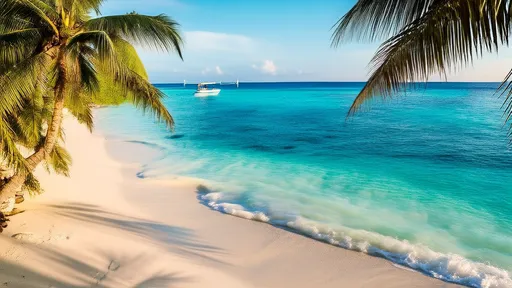
Nestled in the heart of the Philippines, Boracay Island emerges as a paradise on earth, celebrated globally for its extraordinary natural beauty. The island’s most iconic feature is its breathtakingly fine white sand, often hailed as the finest in the world. This powdery sand, soft as flour underfoot, stretches along the famed White Beach, creating a pristine shoreline that captivates every visitor. Complementing this is the crystal-clear turquoise water, so transparent it has earned the poetic name "glass sea," reflecting the sky like a vast, serene mirror. Together, these elements form a landscape of surreal beauty, making Boracay a dream destination for travelers seeking both relaxation and adventure.