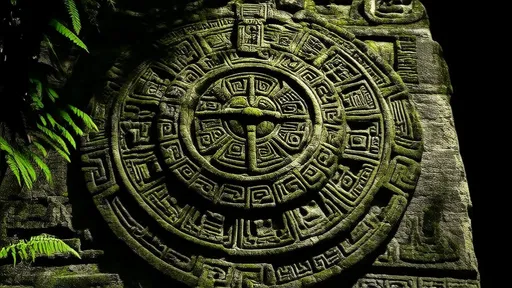
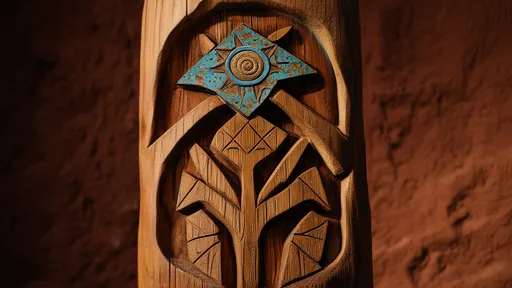
The ancient Maya civilization left behind more than just towering pyramids and mysterious glyphs - they gifted humanity with an intricate cosmic clock that continues to inspire modern design. Fashion designers and textile artists are now rediscovering the profound beauty encoded within the Mayan solar calendar, transforming its sacred geometry into contemporary patterns that bridge millennia.
Beneath the tropical canopy of Central America, Mayan astronomers tracked celestial movements with astonishing precision. Their 365-day Haab' calendar, divided into 18 months of 20 days plus a special 5-day period, wasn't merely a timekeeping device but a cosmological map woven into the fabric of their worldview. Today, this mathematical poetry of cycles and symbols is finding new life through textile innovations that honor its origins while speaking to modern aesthetics.
The Language of Time Woven Into Fabric
Contemporary designers interpreting Mayan calendrical motifs face a unique challenge - how to distill complex astronomical concepts into wearable art without reducing their cultural significance. The most successful creations manage to balance authenticity with accessibility, using the calendar's structural elements as their foundation. Radial designs echo the concentric circles of ancient stone carvings, while stepped patterns recall the terraced temples where priests once observed the heavens.
Color palettes drawn from natural pigments used in Mayan art - cochineal red, Maya blue, and earthy ochres - lend authenticity to these modern interpretations. Digital printing technologies allow for astonishing detail in reproducing the intricate glyphs that represented each day in the Tzolk'in sacred calendar. Some designers incorporate actual date sequences as borders or all-over prints, creating garments that literally wrap the wearer in ancient wisdom.
From Sacred Almanac to Sustainable Fashion
Beyond their visual appeal, Mayan calendar prints carry deeper resonance in today's eco-conscious fashion landscape. The calendar's emphasis on agricultural cycles and natural rhythms aligns perfectly with sustainable design philosophies. Several ethical clothing brands now use these patterns to symbolize their commitment to slower, more meaningful production cycles - a stark contrast to fast fashion's relentless tempo.
The mathematics underlying the calendar also inspires innovative pattern-making techniques. Designers experiment with modular pieces that can be rearranged like calendar components, or garments that change appearance when layered - mirroring how Mayan timekeeping systems interlocked. This dimensional approach transforms clothing into interactive art that engages wearers with Mesoamerican cosmology on a tactile level.
Cultural Reverence in Contemporary Design
As Mayan motifs gain popularity, responsible designers emphasize collaboration with descendant communities. Some brands partner directly with Mayan weavers, combining traditional backstrap loom techniques with modern digital designs. These partnerships ensure cultural continuity while providing economic opportunities for indigenous artisans. The resulting textiles often blend ancient symbols with contemporary silhouettes - a huipil-inspired blouse might feature an abstracted calendar motif screen-printed on organic cotton.
Museum collections of Mayan artifacts have become unexpected resources for pattern development. Designers study the precise proportions of carved calendar stones and painted codices to create mathematically accurate prints. The famous Dresden Codex, with its beautifully preserved astronomical tables, has inspired particularly striking interpretations. One avant-garde collection translated its complex eclipse prediction tables into an asymmetrical dress pattern where negative space represents celestial events.
The Calendar as Personal Narrative
Beyond runway fashion, Mayan calendar prints have entered the realm of personal expression. Custom services allow individuals to create patterns based on their birth dates in the Tzolk'in system, resulting in unique garments encoded with personal meaning. The 20 day signs - from Imix (the crocodile) to Ahau (the sun) - provide rich visual vocabulary for self-representation. A jacket might feature one's nawal (spiritual day sign) embroidered alongside contemporary interpretations of associated glyphs.
This personalized approach reflects how contemporary wearers engage with ancient systems - not as historical artifacts but as living traditions that can inform modern identity. The cyclical nature of Mayan timekeeping particularly resonates in our era of personal growth movements, with its emphasis on recurring patterns of development and transformation.
Technical Innovations in Pattern Reproduction
Reproducing the fine detail of Mayan glyphs on fabric requires cutting-edge technology alongside artisanal techniques. Laser cutting achieves the crisp edges seen in stone-carved originals, while sublimation printing captures the subtle gradations of painted codices. Some designers use 3D printing to create textured fabrics that mimic the relief of calendar stones, adding a tactile dimension to the visual patterns.
The challenge of scaling intricate designs for different garments has led to innovative solutions. One technique involves creating "calendar tile" patterns that maintain their integrity whether used on a scarf or expanded across a maxi dress. Design software allows for dynamic pattern adjustment that preserves the sacred geometry while accommodating modern sizing requirements. These technical adaptations ensure the designs remain visually powerful at any scale.
From Catwalk to Home Decor
The influence of Mayan calendar prints extends beyond clothing into interior design. High-end wallpaper collections now feature enlarged calendar motifs that transform walls into contemporary interpretations of temple facades. The repeating patterns work particularly well in textiles like curtains and upholstery, where their rhythmic quality creates visual harmony. Some avant-garde furniture designs incorporate rotating elements that reference the calendar's cyclical nature.
This domestic translation of sacred geometry makes ancient wisdom part of daily life in a new way. A throw pillow might display a single month from the Haab' calendar, while an area rug could depict the entire 260-day Tzolk'in cycle in concentric circles. These functional art pieces allow for contemplation of Mayan cosmology in everyday moments - morning coffee beside a curtain patterned with Venus cycle calculations, or an evening read under a lampshade printed with eclipse tables.
The Future of Ancient Patterns
As we move further into the 21st century, Mayan calendar prints continue evolving in unexpected directions. Smart textiles incorporating conductive threads now allow some designs to become interactive - touching certain glyphs might activate LED constellations or play recordings of Mayan chants. Augmented reality apps enable wearers to scan their garments and access educational content about the symbols' meanings.
This technological integration points toward a future where ancient and modern systems coexist seamlessly. The Mayan solar calendar's endurance as design inspiration speaks to its profound understanding of time's fabric - not as linear progression but as interwoven cycles of meaning. In transforming these temporal maps into wearable and livable art, contemporary designers honor a civilization that saw the universe itself as an intricate, beautiful pattern waiting to be decoded.
Ultimately, the resurgence of Mayan calendrical motifs in design represents more than aesthetic appreciation - it's an acknowledgment that some systems of knowledge transcend their origins. When we wrap ourselves in these ancient patterns, we don't just wear history; we participate in its ongoing creation, carrying forward the Maya's celestial observations into new expressions. The stones may have spoken their prophecies, but the fabric continues the conversation.
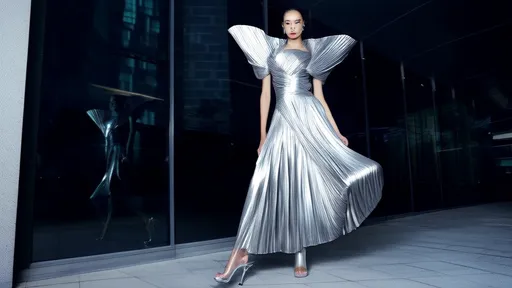
The intersection of athletic functionality and evening wear elegance has birthed one of fashion's most compelling contemporary hybrids: the performance evening gown. Where once these two worlds existed in separate sartorial universes, designers now weave technical fabrics into lavish silhouettes with the precision of couturiers and the ingenuity of engineers. This sartorial alchemy doesn't simply layer sportswear elements over formalwear - it reimagines the very architecture of glamour through the lens of movement.
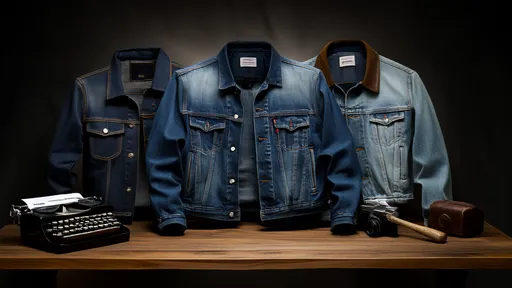
The denim jacket stands as one of fashion’s most enduring silhouettes, a garment that has weathered shifting trends while maintaining its rebellious spirit. What began as utilitarian workwear in the late 19th century has evolved into a cultural touchstone, with each decade leaving its mark on the classic design. From its origins in the American West to its adoption by countercultural movements, the denim jacket’s journey reflects broader societal changes, making it far more than just a piece of clothing.
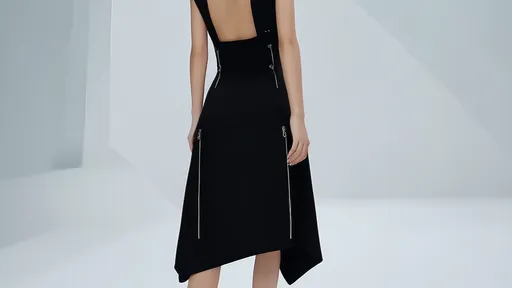
The fashion world is buzzing with the latest innovation in wardrobe staples: the redefined little black dress (LBD) featuring adjustable-length magnetic design. This groundbreaking approach to a timeless classic is set to revolutionize how women interact with their most trusted garment. Gone are the days of owning multiple LBDs for different occasions; this single, versatile piece adapts to your needs with effortless precision.
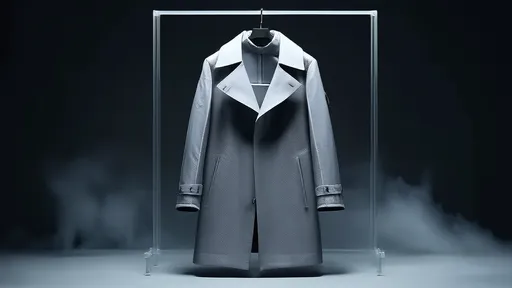
The fashion industry has long sought the perfect balance between aesthetics and functionality, particularly in outerwear. For decades, designers have wrestled with the challenge of creating lightweight, stylish coats that can withstand the elements without sacrificing form. Now, a groundbreaking innovation in textile technology promises to revolutionize the classic trench coat: paper-like waterproof coatings that defy conventional expectations of durability and performance.
The loafer has walked a curious path through fashion history – from Ivy League campuses to Silicon Valley offices, from preppy status symbol to countercultural staple, and now into the pixelated realms of digital avatars. This slip-on shoe with its mocassin construction and heel strap has become one of footwear's most enduring shape-shifters, adapting to each era while retaining its essential DNA.
The ancient Maya civilization left behind more than just towering pyramids and mysterious glyphs - they gifted humanity with an intricate cosmic clock that continues to inspire modern design. Fashion designers and textile artists are now rediscovering the profound beauty encoded within the Mayan solar calendar, transforming its sacred geometry into contemporary patterns that bridge millennia.
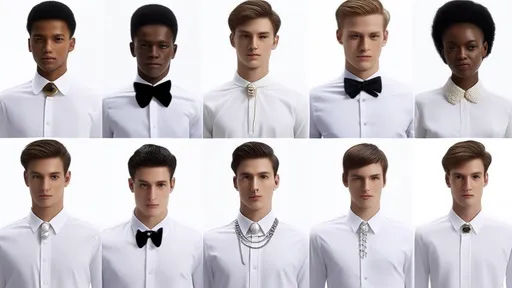
The fashion industry is witnessing a quiet revolution in menswear, where the humble white shirt is being reimagined through innovative detachable collar systems. This movement, often referred to as the "White Shirt Revolution," challenges traditional tailoring conventions by introducing unprecedented versatility to professional wardrobes. At its core lies a simple yet transformative idea: what if the most formal element of a dress shirt could be changed as easily as selecting a necktie?
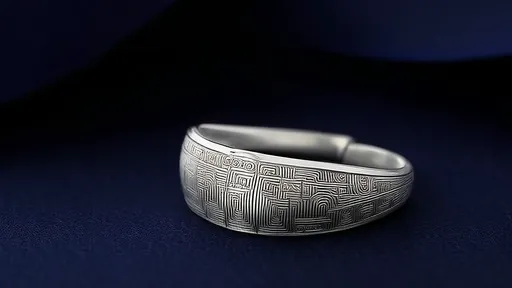
The clinking of tiny silver hammers has echoed through Guizhou's misty mountains for centuries, where Miao artisans transform precious metal into wearable poetry. Today, this ancient craft faces a paradox - how to preserve its soul while shedding unnecessary weight for contemporary life. The answer may lie in subtraction.
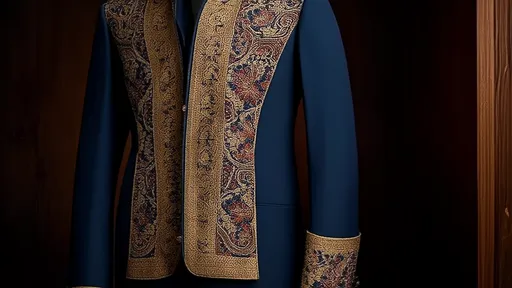
The world of fashion is no stranger to drawing inspiration from the rich tapestry of art history, but few collaborations are as visually striking as the recent trend of transplanting Persian miniature motifs onto modern suiting fabrics. This unexpected fusion of medieval Persian artistry with contemporary tailoring has created a sartorial revolution, blurring the lines between museum-quality craftsmanship and wearable art.
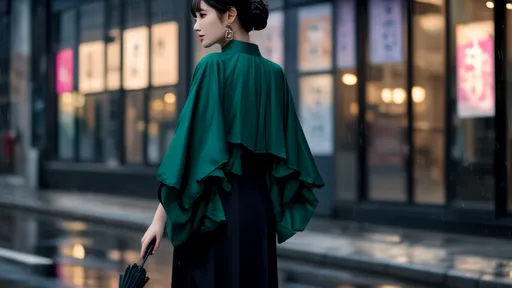
The traditional kimono, with its elegant lines and distinctive sleeve construction, has long been a source of inspiration for fashion innovators. Recently, a bold new styling technique has emerged from Tokyo's avant-garde fashion circles – transforming the kimono's signature wide sleeves into dramatic cape-like silhouettes. This sartorial alchemy breathes contemporary life into centuries-old garment architecture while preserving the garment's cultural DNA.
The rhythmic pulse of African geometry beats through generations, not in rigid Euclidean theorems but in the living language of tribal totems. Across the vast continent, from the scarified patterns of the Dinka to the fractal murals of the Bamileke, a profound visual mathematics emerges – one that distills cosmic order into minimalist forms while carrying the weight of ancestral memory.
The fashion world has long looked to Paris, Milan, and New York as its traditional powerhouses, but in recent years, a new contender has emerged from the East with undeniable force. Shenzhen Fashion Week, once a regional event, has rapidly evolved into a global phenomenon, showcasing the bold, innovative spirit of China’s new wave of designers. What sets this fashion week apart isn’t just its scale or glamour—it’s the raw, unfiltered creativity that challenges conventions and redefines what it means to be "Made in China."
The vast, sun-scorched expanse of the California desert became an unlikely cathedral of high fashion when Anthony Vaccarello presented Saint Laurent's latest collection. Against the stark beauty of this arid landscape, the creative director staged what can only be described as a masterclass in minimalist theater - one that left the fashion world reeling with its bold simplicity and raw emotional power.
The recent Gucci Twins campaign has reignited longstanding debates about cloning aesthetics in fashion advertising. When the luxury house released its eerie twin-themed visuals featuring models with identical features moving in perfect synchronization, audiences experienced equal parts fascination and discomfort. This uncanny valley effect lies at the heart of contemporary ethical discussions surrounding the artificial replication of human beauty.
The Chanel Terminal narrative has emerged as a fascinating cultural phenomenon, weaving together the worlds of luxury fashion and the universal language of travel. At its core, this concept represents more than just a seasonal collection or marketing campaign; it serves as a powerful contemporary metaphor for mobility, transition, and the fluidity of modern identity. The airport terminal, traditionally a transient non-place, becomes transformed through Chanel's lens into a stage for sartorial storytelling where luggage tags become jewelry and boarding passes transform into accessories.
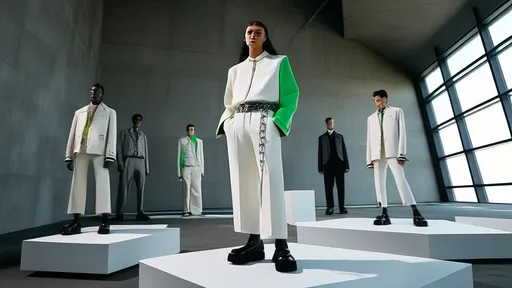
The Prada concrete runway show has once again redefined the boundaries between architecture and fashion, transforming raw industrial aesthetics into a sophisticated language of contemporary style. Against the backdrop of an unfinished brutalist space, models strode through a landscape of exposed beams and rough-hewn surfaces, their garments serving as both contrast and complement to the environment. This deliberate collision of refinement and rawness speaks volumes about fashion's evolving relationship with urban materiality.
The bridal industry is undergoing a quiet revolution as sustainability becomes a priority for modern couples. Among the most significant shifts is the growing popularity of rented wedding dresses, a practice that challenges the tradition of single-use gowns. This movement isn't just about reducing textile waste—it's sparking crucial conversations about hygiene standards in garment circulation. As more brides opt for rented dresses, the need for standardized cleaning protocols has become impossible to ignore.
The luxury resale market has long grappled with the challenge of authenticity. As counterfeit goods become increasingly sophisticated, traditional verification methods often fall short, leaving buyers and sellers vulnerable to fraud. Now, a groundbreaking solution is emerging: blockchain-based authentication systems designed specifically for pre-owned luxury items. This technological advancement promises to revolutionize how we verify high-end secondhand goods while bringing much-needed transparency to the $50 billion global luxury resale industry.
The fashion industry is witnessing a significant shift as accessible luxury brands recalibrate their pricing strategies to adapt to changing consumer behaviors. Among these brands, Michael Kors has emerged as a key player in this strategic pivot, adjusting its price points to maintain relevance in an increasingly competitive market. The move reflects broader trends in the industry, where consumers are becoming more price-sensitive without sacrificing their desire for quality and brand prestige.
The Alpha generation, born between 2010 and 2024, is coming of age in a world vastly different from that of their Millennial or even Gen Z predecessors. As the first truly digital-native cohort, their relationship with fashion and consumption is being shaped by unprecedented technological, environmental, and social forces. Their future wardrobes won’t just reflect personal style but will serve as a canvas for broader cultural shifts.